The Ten Stages of Genocide: A Wake-Up Call for Our Time
How the Decline of Empathy and Understanding Sets the Stage for Atrocities
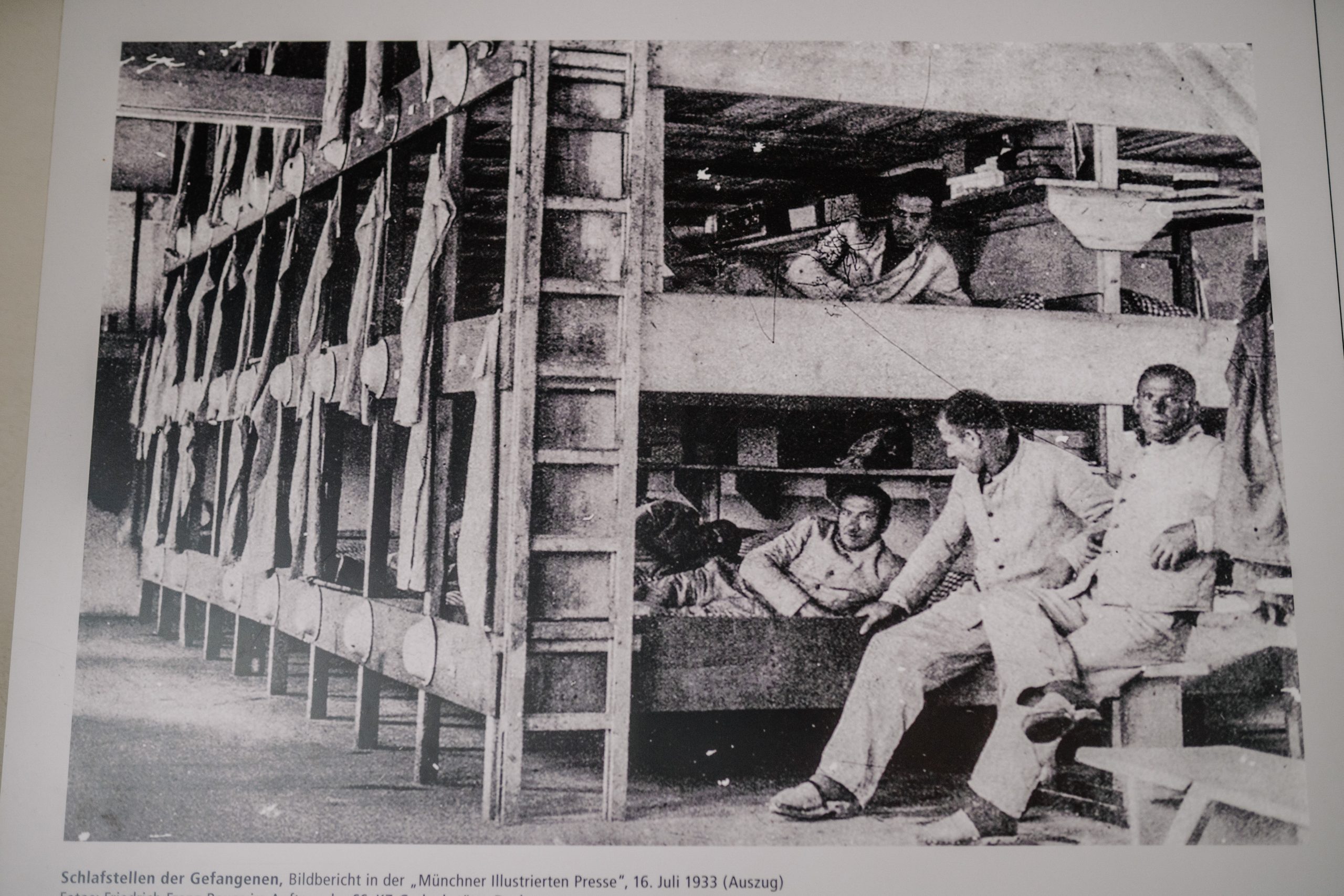
There are moments in history that demand reflection. Moments when we must confront the reality of how easily the worst atrocities can unfold. The words of my great-grandfather, Benjamin Liebowitz, an American physicist, haunt me as I think about the world we live in today. In a letter dated May 1933, he wrote to Franz Boas of Columbia University about the chilling events he witnessed in Germany.
“It is impossible to describe the utter despair of all classes of Jews in Germany. The thoroughness with which they are being hunted out and stopped short in their careers is appalling. Unless help comes from the outside, there is no outlook for thousands, perhaps hundreds of thousands, except starvation or the sleeping pill. It is a gigantic ‘cold’ pogrom. And it is not only against Jews; Communists, of course, are included but are not singled out racially; social democrats and liberals generally are coming under the ban, especially if they protest in the least against the Nazi movement. Please note that I am not speaking from hearsay: I know people and friends in many classes – scientists, scholars, doctors, lawyers, businessmen, economists, etc.”
While this was the beginning of the Holocaust, it was also the early stages of something much more significant: genocide. These words should not be forgotten, and neither should the stages of genocide that we see repeated time and time again. What happened in Germany was not inevitable. It was a series of steps, each building on the one before, leading to the unspeakable horrors of mass extermination. The danger is no longer hypothetical—these steps are already unfolding in our time, and if we do not act, we are allowing history to repeat itself once more.
1. Classification: Dividing People Into Groups
The first stage of genocide is division. It’s the process by which groups of people are categorized and distinguished from one another by labels, often by race, religion, economic status, or political beliefs. Once a group is classified as “other,” it becomes easier to justify their persecution. We’ve seen this happen throughout history, from the segregation of African Americans in the South to the targeting of Muslims under the “Muslim Ban.” It begins with labeling and culminates in a complete breakdown of empathy.
Stop-and-frisk policies disproportionately targeted Black and Latino communities, classifying them as more likely to be involved in criminal activity based on race rather than actual behavior. By repeatedly referring to Mexican immigrants as “rapists” and criminals, a harmful stereotype was created to justify harsh immigration policies and the separation of families. The rise of bathroom bills has been used to ostracize the LGBTQ+ community, villainizing transgender people as a threat to safety in public spaces. Criminalizing homelessness by passing laws that prohibit sleeping in public or panhandling targets those already marginalized, portraying them as undesirable or as threats instead of addressing the root causes of homelessness, such as poverty or mental illness.
Those not in these groups and who are unsympathetic overlook or refuse to see this as a problem. Some use their religion to justify these choices. (Ironically, WWJD does not seem to apply here.)
2. Symbolization: Making People Seem Less Human
Once a group is classified, the next step is to dehumanize them through symbols. Jews in Nazi Germany had to wear the yellow star of David as identification. This symbol made it easier for ordinary citizens to look the other way as the violence began. In America today, we see similar symbols being used to separate people—whether it’s the demonization of immigrants with phrases like “illegal aliens” or the use of the term “thug,” which is often used to stereotype young Black men, particularly when they are involved in incidents of violence or protests. When people are reduced to a symbol or a stereotype, it’s easier for society to justify their mistreatment.
3. Discrimination: Making Laws to Exclude and Oppress
Discrimination is the third stage, and it’s here that we see the introduction of laws or policies designed to exclude or punish a particular group. Benjamin’s letter made it clear that Jews in Germany were being systematically excluded from careers, educational opportunities, and social life. This kind of legal discrimination paved the way for far worse. In America, we’ve seen a push for voter suppression laws that disproportionately affect communities of color. We’ve also seen immigration policies that exclude and harm families at the border. Discrimination starts with regulations and policies, but it quickly escalates to violence.
4. Dehumanization: Calling People Animals or Worse
The fourth stage is dehumanization, where the group is portrayed as less than human—often as animals, vermin, or threats. In the 1930s, the Nazis dehumanized Jews, calling them “rats” and “vermin.” In America, we see the same language used against immigrants, particularly from Central America, who are often depicted as criminals or “invaders.” We’ve seen politicians and media figures paint these communities as a threat to our way of life, using language that dehumanizes them and justifies harm.
5. Organization: Preparing for Violence
The fifth stage is organization—the point at which organized groups plan and execute violence. In Nazi Germany, the government established institutions like the Gestapo to enforce its policies of persecution. In America, we’ve seen the rise of organized extremist groups like the Proud Boys and Oath Keepers, emboldened by the rhetoric of political leaders. During the January 6th insurrection, these groups, many of whom share white nationalist ideologies, attempted to overthrow the results of a legitimate election. They were organized, prepared, and ready for violence. This is not the first time we’ve seen organized violence, and it likely won’t be the last.
6. Polarization: Driving a Wedge Between People
Polarization occurs when society is torn apart by conflict, and groups are pushed further into their separate corners. The polarization we’ve recently seen with issues like race, immigration, and public health was stark. Rhetoric often pits “us” (supporters) against “them” (everyone else), fueling division across the country. This has created a climate where dialogue became nearly impossible, and violence was seen as a legitimate way to resolve differences. Polarization leads to distrust and violence—it’s a key ingredient in any genocidal environment.
7. Preparation: Getting Ready for Violence
At this stage, the groundwork for violence is laid. Governments, political groups, or militias prepare for what they see as a necessary intervention. In Nazi Germany, Jews were rounded up and transported to ghettos and concentration camps. In America, we’ve seen similar “preparations,” with militarized police forces and border patrols being given the power to target and harm immigrant communities. “Law and order” rhetoric has been employed to justify the use of force against protesters, particularly Black Lives Matter activists, fostering an environment where violence is seen as justified and inevitable.
8. Persecution: The Physical Attack Begins
Persecution is the active stage of harm, where violence becomes a regular part of the political landscape. Benjamin’s letter talked about the “cold pogrom” in Germany, where violence was pervasive but calculated. We’ve seen similar violence in America, whether it’s the deaths of Black Americans at the hands of police, the attacks on Asian American communities, or the constant harassment of immigrants and refugees. Violence, both physical and psychological, has become a tool of oppression.
9. Extermination: End Game
Extermination is the final stage of genocide, where entire groups are singled out for destruction. While America has not yet reached this extreme, how can we overlook the disturbing parallels to Nazi Germany’s Final Solution? The threat of extermination—whether it’s through mass deportations, concentration camps, misuse of the prison system and the death penalty, or targeting specific ethnic and religious groups—is a slippery slope.
10. Denial: Refusing to Acknowledge the Harm Done
The final stage is denial—when the perpetrators of genocide refuse to acknowledge the harm they have caused. After the Holocaust, many Nazis and their sympathizers denied the extent of their actions.
In America, we see a similar denial of the systemic violence and discrimination that has affected communities of color. The refusal to acknowledge the role of rhetoric in encouraging violence, from the Charlottesville rally to the Capitol insurrection, is a form of denial that allows harmful ideologies to persist. The erasure of hard history from schools, the removal of books from libraries reminiscent of book burning, the dismantling of DEI, and the demolition of the Department of Education are all part of the denial of the steps that have led to where we are today.
If America’s story is presented as an ever-improving slope to greatness, it negates the need for anyone to pause and reflect not only on the past, but how it relates to the present.
Benjamin Liebowitz was right to warn about the dangers of standing by while people are targeted, oppressed, and dehumanized. His words remind us that we are all responsible for speaking up and acting now. The stages of genocide don’t appear overnight—they creep in, one step at a time, until it’s too late to turn back.
As Martin Niemöller so powerfully put it:
“First they came for the socialists, and I did not speak out—because I was not a socialist.
Then they came for the trade unionists, and I did not speak out—because I was not a trade unionist.
Then they came for the Jews, and I did not speak out—because I was not a Jew.
Then they came for me—and there was no one left to speak for me.”
We must speak up because history is already repeating itself.
Rebecca Barnes is a writer and publisher with a passion for tackling quality-of-life issues that matter most. As a breast cancer survivor and a lifelong advocate for women’s health, she’s used her own experiences to fuel a mission of empowering others through honest, impactful storytelling. Her work is rooted in a commitment to community and a fierce belief in the power of real stories to create real change. Raised with a deep sense of volunteerism, philanthropy, and the importance of speaking truth to power, Rebecca has always been one to say when the emperor has no clothes.